Tuesday, July 24, 2007

Rural Retail Options.

With retailing in a boom in urban India, it maybe is the right time to discuss about retailing alternative in villages of India. There is misconception that there are limited options when one comes to rural retail. Infact in terms of sheer variety the options that a rural consumer may have may not be bad in comparison to the urban consumer. Though the options in urban areas have increased a lot in the last few years. Coming back to the main issue, rural retail, here an attempt has been made to list out the various alternative retail options for a rural marketer and strategy there of.
There are basically five different options for a manufacturer to reach the consumers in villages first is the omnipresent grocery shops which exist in the rural areas, and there are close to forty lakh such shops spread across the six and half lakh villages. These grocery shops are not homogenous; they vary in their sizes, structure and buying preferences. And though generalized as grocery shops, in bigger do have specialised shops. No company planning to succeed in rural markets can do without planning for these shops.
The second retailing option is the one which has been studied and researched more than any other aspect of rural retailing that is Haats and Melas. The number of these Haats and Melas across the country has been put to be more than seventy to eighty thousand across the country. And there have been studies, which suggest that the villagers prefer these Haats to make their purchases to the village retailers.
The third retail alternative is the shops in the nearest small town. The village consumer tends to visit the small town or the district headquarters on a regular basis. The visits linked to his sale of agricultural produce or could be to purchase farm inputs and he combines his FMCG and durables purchase with this. So even if a company has a good direct coverage plan in place, it shouldn’t ignore the wholesale markets, and in certain categories like durables restrict their presence to the small towns itself.
The next alterative is the prevalence of mobile retailers in the villages. This is an area where there is paucity of reliable data. They are small retailers who move from village to village on cycles or on foot selling their goods to households. In certain categories like cosmetics and bangles they have a strong presence. The last option for retailing is a combination of various new and old outlets which have been set up for different purposes put to use to distribute products. The examples of these include ration shops, post offices, petrol retail shops and the newer formats like echoupal and other kiosk based options.
To develop a complete retail strategy in villages, one should plan to address most of these alternatives; he should have plans to tackle the wholesalers in the small towns, and the retailers in the villages and should have plans to accommodate the major Haats and Melas which occur in the area.

Indian Market-Is the Elephant Running???

The first blog on marketing in India is driven by fact and figures which I have been reading in the newspapers lately. We are in the middle of the festive season, which begins in September with Ganesh Chaturthi and other festivals and runs till end Jan including Christmas and New Year. This is the time where most of the promos, new product launches are packed in and sales people across the country keep their figures crossed to reach their sale targets. But this October we have seen phenomenal sales figures, though the monthly figures are still trickling in , a sample of the sales of few brands and comapnies,

Nokia sold 4 lakh handsets on 19th October, which is it's highest record sales that the company has achieved anywhere in the world. In total all mobile companies put together have added over 6.6 million subscribers in October, compared with a total 1.6 million subscribers in 2000.
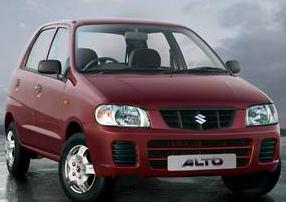
Coming to another brand, ALTO of Maruti sold 22,294 units in October, which is a record sales for any model and make in India. The overall industry growth was also very good the mini and compact cars grew by over 19%, vis-à-vis the same period last year,

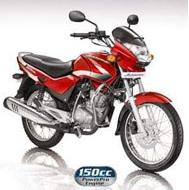
In the two wheeler segment , most of the motorcycle manufactures have seen good growth in October , most of them have seen a growth of more than 20%. Hero Honda alone has sold over half a million two-wheelers in October, which is record even for the world's No.1 two-wheeler company.
I can go on and on for different brands and segments, but the point is that we are entering a phase of unprecedented growth and challenges for Indian Marketers. The blog will try to bring the readers updated with the latest development and changes in the Indian market place.

Packaging The 5ft P Of marketing.

Packaging though not part of the original 4 Ps , it sure deserves a place in the Indian marketers product mix. Though it is probably in the developing markets that it holds more importance than in the developed markets of the west. In India companies like CavinKare have achieved success in the shampoo markets through the introduction of sachets in the early 1980s, and in fact ushered in the sachet revolution in the country with most the FMCG majors following up with their own sachets. Today one can find anything from coconut oil to tea powder in sachets.

The advantage for the consumer is he gets to use a product at a lowered per use cost and easy of trail. There was a time 5-6 years back when the prices of the sachets when combined were cheaper than the bigger packs offered by the same company, now that anomaly has been removed. In my recent train travels I was given pickles by the pantry in sachets, worth 50pcs each, the brand was 'Chinni' again from CavinKare.More details on Cavinkare at www.cavinkare.com

Rail innovations--Nokia Train.


After Kurkure Express Now we have Nokia trains. The corporate world is trying innovative ways of reaching consumers and Railways is willing to partner with them. After the pilot run of summer special trains in South , now telecom major Nokia taking a train across the nation to promote its products. The idea is to use trains as concept stores where in the passengers can widow shop and try out various handsets of Nokia. Plans are also afoot to run a non-passenger train across the country which will stop at small stations across the country displaying Nokia products.


With a Tab of approximately Rs 35-45 lakh for a round trip, it looks like an attractive option. This is one more addition to the long list of unconventional methods of reaching out to the far flung consumers in the country , breaking through the media clutter and improve brand awareness . It is also to be noted that the initiative comes from a player which is clear market leader with close to 70% of market share the mobile handset market which shows that they are not looking at the current market share but invest in the future as the penetration would increase. and want to ensure that the brand retains its market share as the category grows.

Changing Dynamics In Marketing.

Marketing was easier twenty years back. Have one successful product in the portfolio and the company and the manager could sit back and relax. But the scenarios today is a lot different increased pressure from competition, more demanding consumers and impact of technology is forcing the marketers to be on his toes, they cannot afford to relax. It is like pedaling a cycle uphill if you stop pedaling you will go down. One classic case which comes to my mind is that of Sony Playstation, When PS-I came into the market it was an out and out success, responsible for a major part of Sony’s profits at that time. But the current third version PS-III is not doing as well as was anticipated. In a period of 12-14 years the situation for Sony has changed. Old competitors Ninentodo's Wii and newer ones like Microsoft’s XBox is doing better in the market.The reasons attributed PSIII below par performance has been supply chain glitches and pricing issues. But the stark reality for a marketer is that he or she cannot be complacent and hope that the earlier successes would be enough to get him the sales day after day. The competition responds at a far greater speed than what used to be in the earlier days and consumers want newer features and versions every year and if you don't provide them the competitor would. Though it is truer in the case of technology-driven companies, it also applies to the old economy companies, but the rate of change is much slower....

ITC Bingo...Tough Fighting With Kurkure.


ITC in March launched it's ready-to-eat snacks 'Bingo' to mark it's entry into the Rs 2,000 crore fast-moving branded snacks market. As usual the company has backed the launch by a well designed ad campaign and the taste and variants of the product are based on extensive research on tastes of consumers . The launch of Bingo represents ITC Foods' fifth major line of foods business after Staples, Biscuits, Ready-to-Eat and Confectionery businesses. The launch represents the attempt made by the company to reduce the dependence on tobacco in it's total turnover.

Though the success of otherwise of 'Bingo' would be decided in the market one thing which I have not been comfortable with is the number of variants that the product has been launched with. There are a total of sixteen variants. The intended strategy would be try and cater to the tasted of the as many consumers as possible, but total number of variants seem a little too high, especially for a new launch.

The impact of too many variants would be on three participants . First is the the channel, here the advantage of having more variants that it would enable the sales force to push more stocks into the channel during the launch. This initial push would give the sales force some thing to cheer about. The distributor would have to take minimum quantities of all the variants which would eventually force him to carry more stocks, with him having no idea of what would sell. The retailer normally would have a limited budget for the category and when confronted with this many variants he would either have to select a few or take smaller quantities of all, both of the strategies would be risky for a new launch.

The consumers would be the second set of people who would also be troubled by the number of variants. He has to try the new tastes one by one to decide which one would be best. Though the comapny would want to claim that the pricing at 5 and 10 rupees should make trials easy. And if he is not happy with the first variant he tries he might not go on to try the other variants in offer.

Lastly the production people would also behappy if lesser variants are introduced to start with, because they would not know what is moving off the shelfs and the consumer acceptance of the variety in the offerings.

So all in all though the impact of many variants would look good in the short run, it may not turn out to be the best strategy in the long run.......

Bidi-Skull & Cross Warning !!

How much would a pictorial representation of a warning have an impact on the consumption of a product? The pictorial representation I am talking about is the 'skull and crosses' symbol that is being proposed to be put on tobacco products in the country. The fear expressed by manufacturers is that the sales of tobacco products would drop leading to large-scale unemployment in the Bidi industry. The assertion is that it would lead to a drop in the sales of tobacco products. Though most of the tobacco products do have some sort of warning written on them as in the case of cigarettes and packed tobacco, the warning has not been put on Bidis. The legislation is a step in the right direction, as written warning may not be of much use as the fact is that Bidi is consumed by people who are illiterate ( may a gross generalization) .
And when the symbolic picture is in place it would communicate that consumption of tobacco products is harmful. I am not sure about the impact that it would have on the old -seasoned tobacco consumers, but might have an impact on the new-user. The government has been deferring the implementation of the order under the pressure of powerful lobby of Bidi manufacturers in the country.